
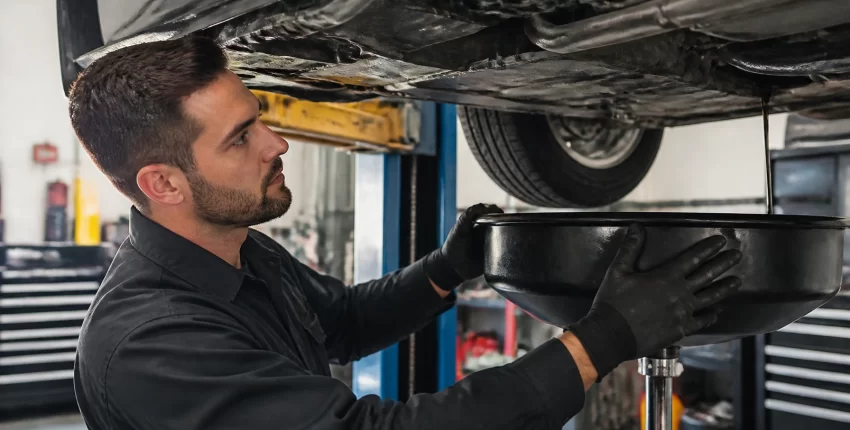
Getting an oil change is one of those routine tasks that most drivers in Hurricane, WV view as a simple “to-do” item. You pull in, get the oil swapped, and head back out on the road. However, what seems like a basic maintenance job is actually the most critical factor in how long your engine lasts.
At Teays Valley Auto Service Center, our ASE-certified mechanics have seen it all. With over 70 years of combined experience, we’ve witnessed how a few “small” mistakes during an oil change can lead to massive repair bills down the line. Whether you are a DIY enthusiast or you’ve been taking your car to a quick-lube shop that prioritizes speed over quality, you might be making mistakes that are quietly hurting your vehicle.
Here are the seven most common mistakes people make with their oil changes and how you can fix them to keep your car running smoothly for years to come.
1. Using the Wrong Oil Viscosity
If you’ve ever looked at a bottle of oil, you’ve seen numbers like 5W-20 or 10W-30. This refers to the oil’s viscosity, which is essentially a measure of how thick or thin the oil is at different temperatures. Modern engines are built with incredibly tight tolerances, meaning the “veins” the oil travels through are very narrow.
If you use oil that is too thick, it won’t circulate quickly enough during a cold start, causing metal-on-metal friction. If it’s too thin, it may not provide enough of a protective barrier when the engine is hot. Many people assume “oil is oil,” but using the wrong grade can lead to reduced fuel economy and premature engine wear. Always check your owner’s manual or ask a mechanic in Teays Valley to confirm exactly what your specific engine requires.
2. Skimping on the Oil Filter
It is tempting to grab the cheapest oil filter on the shelf at the parts store, but this is a classic “penny wise, pound foolish” mistake. The oil filter’s job is to trap contaminants: metal shavings, carbon, and dirt: before they can cycle back through your engine.
Low-quality filters often have less “media” (the paper-like material inside that does the filtering) and lower-quality bypass valves. If a filter gets clogged or the valve fails, dirty oil can bypass the filter entirely and circulate through your engine. When you come to us for an oil change in Hurricane, WV, we use high-quality filters designed to meet or exceed your vehicle manufacturer’s specifications, ensuring your oil stays clean between visits.
3. Reusing the Old Drain Plug Gasket
The drain plug is the bolt at the bottom of your oil pan that is removed to let the old oil out. Most vehicles use a small metal or rubber washer, often called a crush washer, to create a perfect seal.
As the name suggests, a crush washer is designed to be “crushed” once to form a permanent seal. If you reuse the old one, it’s already been flattened and may not seal properly a second time. This leads to slow, annoying drips on your driveway. Even worse, if that drip goes unnoticed, your oil level will eventually drop to dangerous levels. It’s a tiny part that costs pennies, yet skipping it is a mistake we see far too often in DIY jobs.
4. The “Double Gasket” Disaster
This is perhaps the most dangerous mistake on this list. When you remove an old oil filter, the rubber O-ring gasket is supposed to come off with it. However, sometimes that gasket gets stuck to the engine block. If you don’t notice it and screw the new filter on top, you now have two gaskets: a “double gasket.”

When you start the engine, the pressure will cause the oil to spray out from between those two gaskets almost immediately. Within seconds, your engine can lose all its oil, leading to a total engine seizure. Our team always performs a “visual check” of the mounting surface to ensure the old gasket is gone before the new one goes on: a simple step that saves engines.
5. Overtightening the Hardware
There is a common misconception that “tighter is better” when it comes to car parts. With oil changes, this couldn’t be further from the truth. If you overtighten the drain plug, you risk stripping the threads in the oil pan. Replacing an oil pan can cost hundreds, if not thousands, of dollars.
Similarly, an overtightened oil filter can be nearly impossible to remove next time, or it might even deform the gasket and cause a leak. Most filters only need to be “hand-tight plus a quarter turn.” A professional auto repair shop in Hurricane, WV uses calibrated tools and the “feel” that comes from decades of experience to get it exactly right every time.
6. Ignoring Manufacturer-Specific Specs (Beyond Just Weight)
Modern cars often require more than just the right viscosity; they require specific oil certifications. For example, many European brands or high-performance domestic vehicles require oils that meet “Dexos” or “Euro Spec” standards.
These oils contain specific additive packages that protect turbochargers, prevent sludge buildup, and keep emissions systems healthy. Using a generic bulk oil that doesn’t meet these standards can actually void your vehicle’s warranty. This is why having an ASE certified mechanic in Hurricane, WV handle your service is so important: we know the nuances of every make and model, from luxury brands to standard passenger cars.
7. Failing to Check the Oil Level Post-Service
You’ve drained the oil, changed the filter, and poured in the amount of oil the manual says you need. You’re done, right? Not quite.
A common mistake is failing to run the engine for a minute and then checking the dipstick again. The new oil filter needs to fill up with oil, which actually drops the level in the rest of the engine slightly. If you don’t “top it off” after that initial run, you might be driving around half a quart low. Additionally, checking the level on level ground is the only way to get an accurate reading. A slight incline can make the engine look full when it isn’t.
Why a Professional Oil Change Makes the Difference
While it might be tempting to handle your own maintenance, the value of a professional eye cannot be overstated. When you bring your vehicle to Teays Valley Auto Service Center, you aren’t just getting an oil change; you’re getting a comprehensive health check for your car.
Our technicians don’t just swap fluids; they look for:
- Worn belts and hoses that could leave you stranded.
- Brake pads that are getting thin.
- Tires that need rotation or have uneven wear patterns.
- Leaking shocks or struts.
We treat every car like it’s our own, drawing on our 70+ years of combined experience to spot trouble before it starts. We also understand that unexpected auto repairs in Hurricane, WV can be a stressor for the family budget. That’s why we offer easy 6-month financing options to make essential maintenance and repairs accessible for everyone in our community.
Conclusion
An oil change is the simplest way to protect your investment, but only if it’s done correctly. By avoiding these seven common mistakes: from using the wrong viscosity to the dreaded “double gasket”: you ensure your engine stays healthy and efficient.
If you’re looking for a trustworthy mechanic in Teays Valley who values honesty, precision, and customer satisfaction, look no further. Whether you need a quick fluid change, a state inspection, or more complex repairs, we are here to help.
Don’t leave your engine’s health to chance. Give your car the professional care it deserves and enjoy the peace of mind that comes with ASE-certified expertise.
Ready for your next service? Contact Teays Valley Auto Service Center today to schedule your appointment and experience the difference that 70 years of experience makes!