Why Your Car Shakes at 65 MPH (And How a Wheel Alignment in Teays Valley Fixes It)
There is almost nothing quite as annoying: or subtly nerve-wracking: as cruising down I-64, listening to your favorite podcast, and suddenly feeling your steering wheel start to buzz or shimmy right as you hit 65 miles per hour. If you ease off the gas, the shaking might fade, but the moment you speed back up to highway velocity, it returns like clockwork.
For drivers in Hurricane WV and throughout the local community, this is a surprisingly common automotive mystery. You might find yourself wondering whether you have a flat tire, a bad wheel bearing, or if you simply need a wheel alignment in Teays Valley.
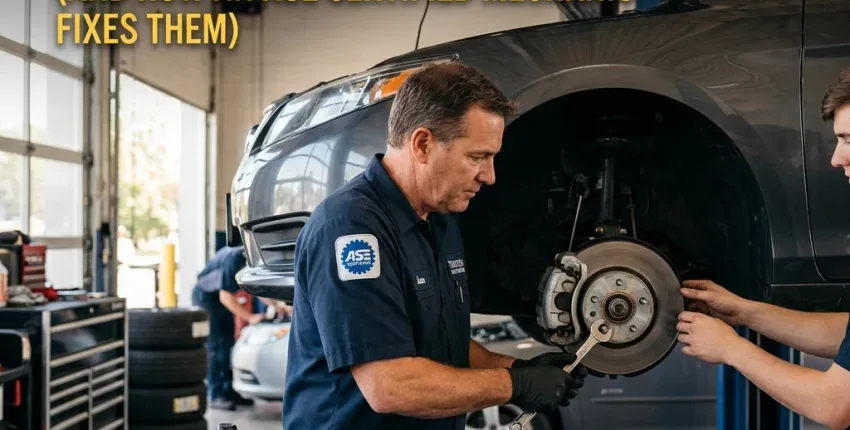
At Teays Valley Auto Service Center, our ASE-certified mechanics help drivers untangle these frustrating vehicle vibrations every single day. Let’s take a closer look at why your car starts shaking at highway speeds and how proper wheel alignment, balancing, and suspension care get your ride running smooth and steady again.
Understanding the Highway Speed Shake: Balance vs. Alignment
When your vehicle vibrates specifically within a certain speed range: usually between 55 and 75 MPH: it is your car’s way of telling you that something in the rotational assembly or suspension is out of harmony. However, not all vibrations stem from the same root cause.
Many drivers assume that any steering wheel shake automatically means their car is out of alignment. While misaligned wheels can certainly cause trouble, highway speed shaking is most frequently a symptom of wheel imbalance, a bent rim, or irregular tire wear patterns.
Let’s break down the main culprits behind that 65 MPH vibration:
1. Unbalanced Tires
Every tire and wheel assembly has slight weight variations. When technicians mount a new tire, they place small lead weights on the wheel rim to counteract these imbalances so the wheel spins smoothly at any speed. Over time, those weights can fall off, or tires can wear unevenly, throwing the assembly out of balance.
- The Symptom: A steady, humming vibration that typically kicks in around 60 MPH and grows more intense as you accelerate. If the shake is in your steering wheel, it’s usually a front tire; if you feel it under your seat, it’s often a rear tire.
2. Bent Wheels or Tire Damage
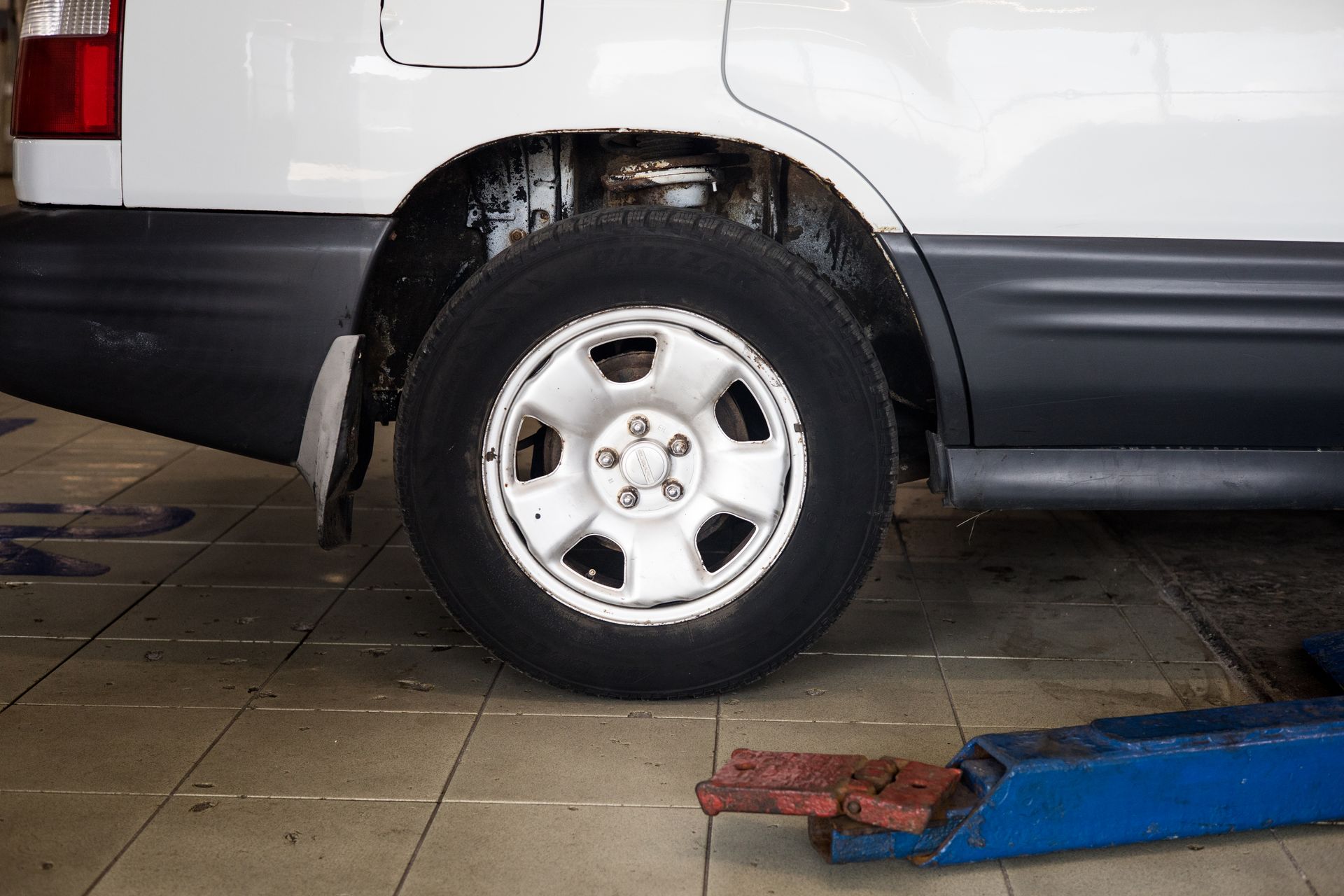
Hitting a deep pothole on a rough road near Hurricane WV can slightly bend your alloy or steel wheel rim. Even a microscopic bend can cause a noticeable rhythmic thumping or shaking at highway speeds. Similarly, internal tire damage: such as a separated tread belt: creates an uneven rolling surface that no amount of standard wheel balancing can cure.
3. Uneven Tire Wear Caused by Poor Alignment
This is where wheel alignment enters the picture. While a pure misalignment doesn’t usually cause a high-speed vibration on its own, it does cause your tires to scrub against the pavement at incorrect angles. Over time, this creates severe, irregular tread wear: such as cupping or feathering. Once your tires wear into that distorted shape, those deformed tread blocks start bouncing and vibrating at 65 MPH.
In short: poor alignment ruins your tires, and those ruined tires cause the shake!
Why Ignoring the Vibration Makes Things Worse
It’s easy to adopt an out-of-sight, out-of-mind attitude when your car only shakes at highway speeds: especially if you mostly drive around town at lower speeds. But putting off a diagnostic checkup almost always leads to bigger headaches down the road.
When a wheel is severely unbalanced or your suspension angles are out of spec, the constant high-speed vibration places unnecessary stress on sensitive components. Over time, that relentless shaking can accelerate wear on your:
- Steering and suspension components (like tie rods, ball joints, and control arm bushings)
- Wheel bearings, which can begin to hum or fail prematurely
- Tire tread, cutting the lifespan of a pricey set of tires short by thousands of miles
Addressing the issue early saves you from paying for costly premature replacements later on.
What to Expect During a Professional Inspection
When you bring your vehicle to our locally owned shop, our experienced team doesn’t just guess at the problem. We perform a thorough evaluation to pinpoint exactly what is causing your car to shake.
Our comprehensive approach typically includes:
- Road-Test Diagnostics: Our technicians drive your car to feel the vibration firsthand, noting whether it occurs during acceleration, cruising, braking, or at specific speeds.
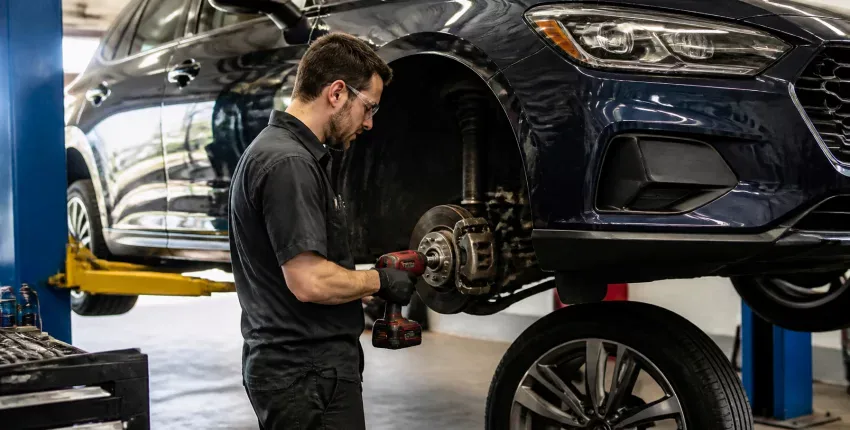
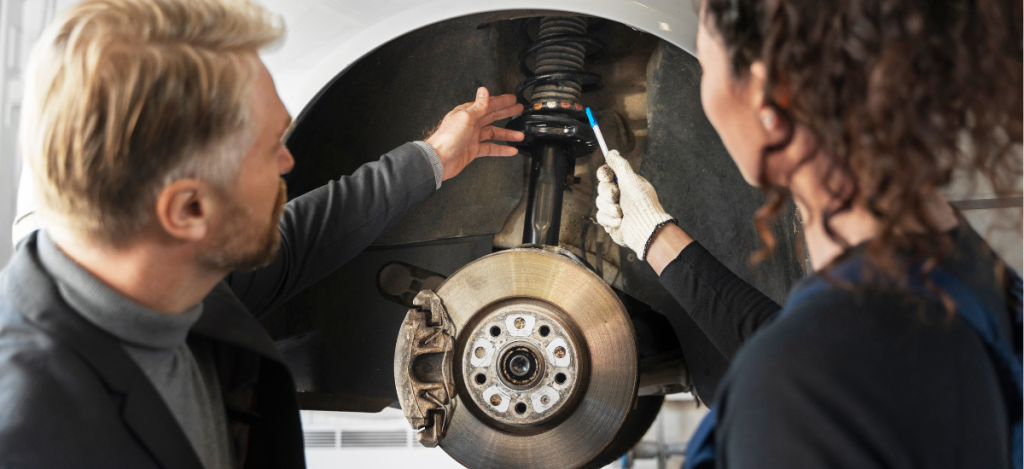
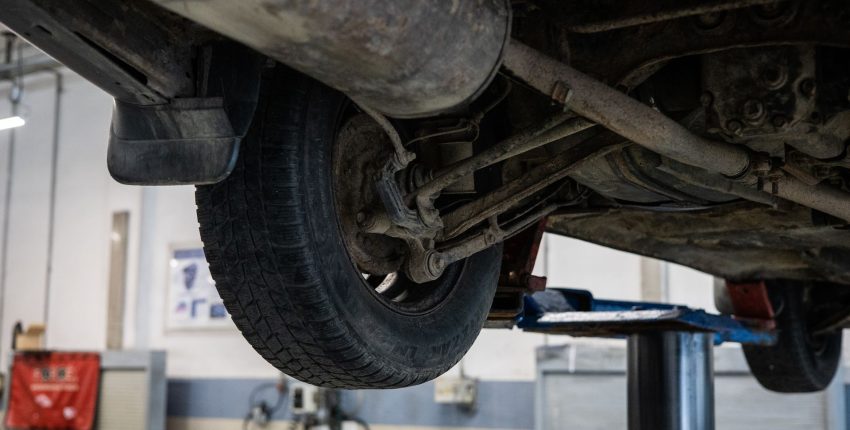
- Suspension and Steering Check: We inspect your steering and suspension system for looseness, worn bushings, or damaged parts.
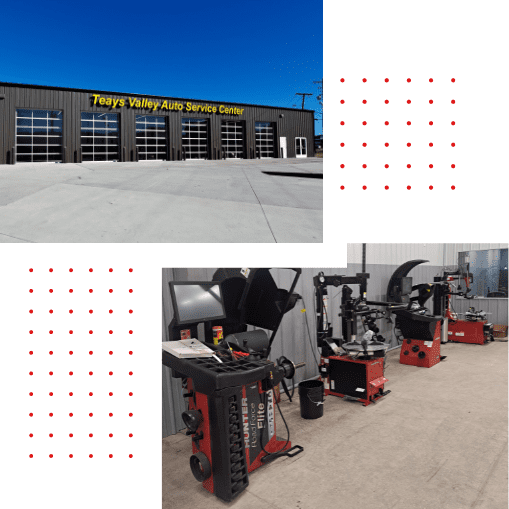
- Wheel and Tire Inspection: We check for bent rims, tread separation, and irregular wear patterns, followed by precise wheel balancing and laser alignment checks on our state-of-the-art equipment.
If you also notice your car pulling to one side, or your steering wheel sitting crooked when you drive straight, a professional wheel alignment will be paired with tire balancing to restore factory specifications.
Experience Honest Auto Care in Teays Valley
At Teays Valley Auto Service Center, we believe car repairs shouldn’t be stressful or confusing. As a full-service auto repair shop with over 70 years of combined ASE-certified experience, we treat every vehicle that rolls into our bays with the care and honesty we would expect for our own families.
Whether you need a precise wheel alignment, routine fluid changes, brake service, or general diagnostics, we provide competitive pricing, easy 6-month financing options, and 100% customer satisfaction guarantees.
Don’t let a shaky steering wheel ruin your daily commute. If you are near Hurricane WV and experiencing highway vibrations, stop by or contact us today to schedule your inspection and get back to a smooth, comfortable drive.